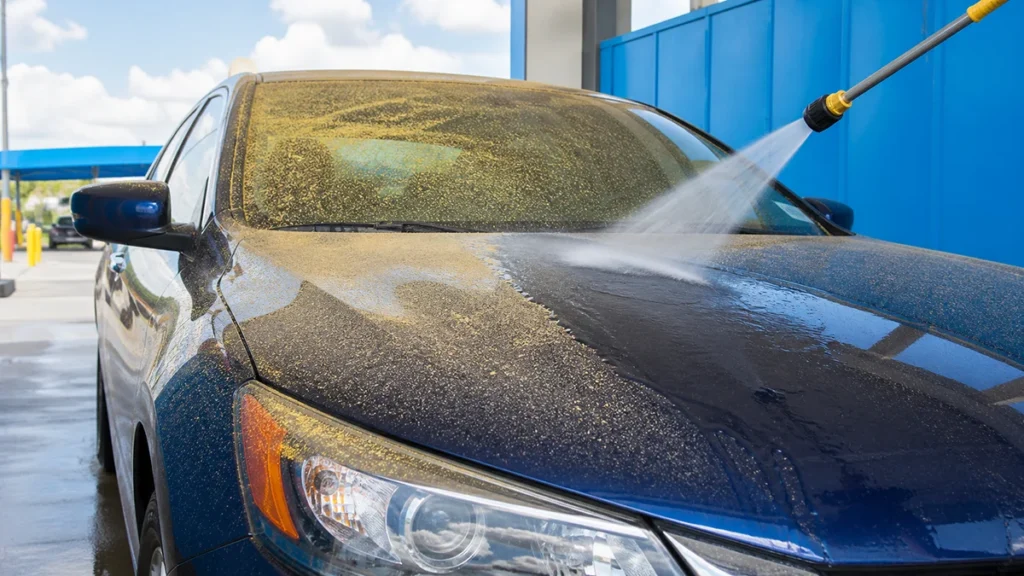
Central Texas buildup isn’t one problem. Fine pollen behaves differently from gritty road dust. Bug residue clings to the front of the vehicle. Fresh water spots sit on the surface, while older mineral marks may have already affected the finish.
The safest wash starts by identifying what you’re dealing with. That choice tells you where to use pressure, where to allow dwell time, and when extra rubbing will only make matters worse.
Check the Paint Before Touching It
Run your eyes across the roof, hood, windshield base, mirror caps, and trunk or liftgate. Don’t run your hand across dry paint. A yellow-green haze is usually loose pollen. A gray film with visible grains may include dust or sand. Speckled marks on the bumper are often insect residue. Pale rings that remain after a rinse point to mineral deposits.
If the vehicle has been in direct sun, give the body time to cool. Products that dry too quickly can leave streaks or deposits. Cool panels also give pre-soak and soap more time to loosen material.
Treat Loose Pollen With Water First
Don’t wipe a dry layer of pollen with a towel, sleeve, or windshield squeegee. Pollen can be mixed with harder particles picked up from the air and nearby roads. Dragging that material across the finish creates avoidable contact.
Begin with a high-pressure rinse at a safe distance. Start at the roof, sweep across the glass, then clear the hood, upper doors, rear deck, and lower body. Pay special attention to the cowl below the windshield. A rinse that ignores the cowl leaves a reservoir of pollen ready to blow back onto the glass.
Use Pre-Soak for Mixed Road Film
After a windy day, pollen often mixes with tire spray, construction dust, and oily road film. Water removes the loose layer but may leave a dull veil behind. Apply pre-soak to those remaining areas, beginning with the lower panels and moving upward.
Give the solution a brief dwell period while it stays wet. A dark hood can heat quickly, even when the air feels comfortable. If an edge begins to dry, move to the next step instead of waiting for the full planned dwell time.
Let Pressure Move the Dirt
Follow pre-soak with high-pressure soap. Angle the wand so runoff travels toward the floor. Broad, overlapping passes are more useful than holding a concentrated stream on one stubborn dot.
Consider a sedan parked beneath trees during spring pollen season. The roof and hood may rinse quickly, but the mirror bases, license plate recess, grille openings, and rear badge can keep shedding dirty water. Give those collection points their own passes before judging the wash.
Handle Bug Residue in Small Sections
A highway run can leave the front bumper and mirror caps covered with dried insect residue. Soak one section, wash it with high-pressure soap, then rinse before the product dries. Repeat the cycle if the material is softening but hasn’t released.
Don’t move the wand dangerously close or attack the area with hard brush pressure. If a bonded spot remains after a normal wash, use a paint-safe specialty product according to its label or ask a detailer. Aggression isn’t a substitute for the right chemistry.
Decide if Brush Contact Is Worth It
Pressure washing may be enough for fresh pollen. A foam brush is more useful when a thin film remains across otherwise sound paint. Rinse the brush thoroughly before use, keep plenty of foam between the bristles and the surface, then make light straight passes.
Work high panels before low ones. Don’t take a brush from a gritty rocker panel back to the hood. If the vehicle has matte paint, a wrap, damaged clear coat, or delicate aftermarket trim, check the maker’s care instructions before any contact wash.
Separate Fresh Spots From Etching
Fresh water spots are mineral residue left when droplets evaporate. A full wash followed by a spot-free rinse may remove them. Finish with slow passes, then catch water trapped behind mirrors, handles, emblems, roof rails, and the fuel door with a soft microfiber towel.
If a pale ring remains after the surface is washed and dry, it may need a dedicated mineral remover or paint correction. Don’t keep rubbing the same area with more pressure. Test any specialty product in an inconspicuous spot and follow its label.
Match the Visit to the Buildup
- Fresh pollen after one breezy afternoon often needs a thorough rinse, high-pressure soap, another rinse, and spot-free water.
- Dust from an unpaved shoulder needs a patient initial rinse before any brush contact.
- Bug residue after a night drive benefits from short soak-and-rinse cycles on the front end.
- Mineral rings after sprinkler overspray deserve a full wash first, followed by inspection after drying.
Pick a Cooler Time in Round Rock
Brushy Creek Wash & Ride is open around the clock at 3624 Hillside Drive. An early-morning or evening visit gives you cooler panels and more working time before products dry. The bays include pre-soak, high-pressure soap, foam brushes, protective finishes, and spot-free rinse, so you can match the process to what landed on the car.