
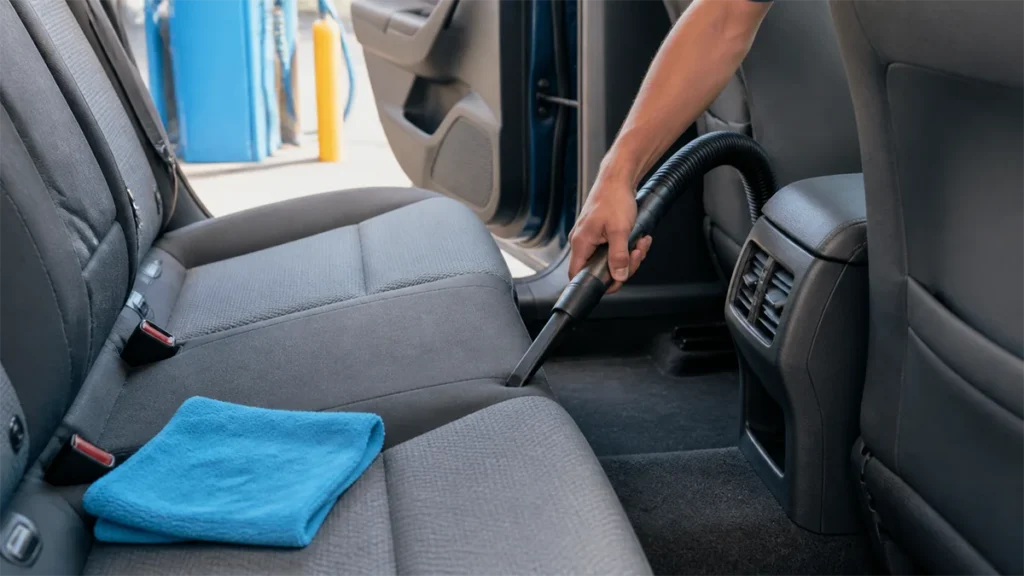
An interior deep clean goes faster when dry debris comes out before any liquid goes in. Vacuuming crumbs after shampooing turns a manageable mess into wet grit. Treating a stain before removing loose dirt spreads the edge. A zone-based routine avoids both problems.
Bring a small trash bag, two microfiber towels, and a soft detailing brush if you have one. Brushy Creek Wash & Ride provides the heavy equipment, including strong vacuums, shampoo and vacuum capability, plus spot remover.
Clear the Cabin First
Remove drink cups, receipts, charging cables, loose toys, and everything stored in the door pockets. Put items you want to keep in one bag or box instead of moving them from seat to seat.
Take out the floor mats. Shake them away from the vehicle so dust doesn’t land back inside. Check beneath the seats for coins or small objects that could block the vacuum nozzle.
Protect Sensitive Items
Don’t vacuum or spray around loose electronics, exposed wiring, seat connectors, or damaged trim. Keep liquid away from screens, switches, vents, and speaker openings. Spray a compatible product onto a towel rather than directly onto a dashboard or control panel.
If a child safety seat needs cleaning, use its manufacturer instructions. Harnesses, buckles, foam, and covers can have strict limits on soaking, detergents, and machine washing. Don’t treat a safety seat like ordinary upholstery.
Start With the Front Row
Slide the driver seat fully back and vacuum the front half of the footwell. Move it forward and reach the carpet behind the seat rails. Repeat on the passenger side. Slow nozzle passes lift more grit than quick sweeps.
Use the narrow nozzle along the console, seat-track edges, pedal area, and lower door trim. Don’t push the nozzle against pedals or electrical connectors. A soft brush can loosen dust from seams while the vacuum waits close enough to catch it.
Pull Debris From Seat Seams
Open fabric seams gently with one hand and guide the crevice tool through the gap. Work across the seat back before the cushion so crumbs fall into areas you haven’t finished.
For leather or vinyl, keep hard plastic nozzle edges from scraping the surface. Vacuum loose material first, then use only a cleaner approved for that material. Test it on a hidden patch near the lower seat edge.
Work the Rear Cabin by Zone
Divide the rear area into left seat, center section, right seat, and floor. That pattern prevents the common missed strip beneath the front seats. Fold seats only as the vehicle manual allows, then vacuum the exposed hinges and cargo seams.
A family crossover may hide cracker pieces between the seat base and backrest. A work truck may carry fine grit along the door-side carpet. A pet owner’s vehicle often collects hair on the seat back and cargo edge. Give the tool and time to the actual mess instead of repeating the same pass everywhere.
Match the Method to the Stain
Blot a fresh drink spill before rubbing it. Let dried mud lose its moisture, then vacuum the loose dirt before applying spot remover. For an unknown stain, begin with a small amount of product on a hidden area.
Work from the outside edge toward the center. That keeps a coffee ring or soda mark from growing. Use several controlled treatments rather than saturating the fabric in one attempt. If color transfers to the towel or the material changes texture, quit using that product.
Shampoo After Dry Vacuuming
Use shampoo and vacuum equipment only after the carpet, mat, or compatible upholstery is free of loose grit. Apply moisture evenly to the dirty area, then make deliberate extraction passes. More liquid usually means more drying time, not a better result.
Keep the nozzle moving across fabric to prevent one soaked patch. On a carpeted floor mat with a dark heel mark, treat the marked section first, extract it, then blend the surrounding area with lighter passes.
Keep Moisture Under Control
Press a dry microfiber towel against treated fabric. If the towel comes away wet, make another extraction pass. Don’t reinstall damp mats over carpet, and don’t close a wet cabin for hours.
When conditions allow, leave the doors open while you finish the exterior or organize the cargo area. Continue ventilating the vehicle after you leave. Thick seat foam and carpet padding can hold moisture long after the surface feels only slightly damp.
Use a Twenty-Minute Reset
- Four minutes for trash, belongings, and mat removal
- Eight minutes for seats, seams, floors, and cargo vacuuming
- Five minutes for one or two stains plus targeted shampoo
- Three minutes for extraction checks, towel work, and ventilation
If the cabin needs more than that, split the job. Vacuum the entire vehicle during one visit, then return for fabric treatment when you’ll have enough drying time. Half-finished shampooing is worse than a thorough dry reset.
Use the Interior Equipment Anytime
The vacuum area at Brushy Creek Wash & Ride is available 24 hours at 3624 Hillside Drive in Round Rock. You can clean the cabin after an exterior wash or make a separate visit when crumbs, mud, or a drink spill can’t wait.