A clean wash can still look unfinished when rinse droplets dry into pale rings, dots, or cloudy streaks. Those marks usually aren’t water itself. They’re minerals, soap residue, or other material left behind after the water evaporates. Effective water spot prevention comes down to controlling heat, rinsing thoroughly, and removing water before nature does it for you. Clean microfiber drying towels make that job faster and gentler, but the towel isn’t magic. Timing, technique, and towel condition all matter.
Why Water Spots Form After a Wash
Clear-looking water isn’t necessarily free of dissolved material. According to the U.S. Geological Survey, water hardness is primarily associated with dissolved calcium and magnesium. Water can also carry salts, metals, and other dissolved solids. When a droplet evaporates, the water leaves as vapor while much of that material stays on your paint or glass.
Hard water is a common offender, but it isn’t the only one. Soap that wasn’t fully rinsed away can dry into streaks. Road dust may mix with droplets and leave dirty rings. Water trapped inside a mirror housing can run down a clean door five minutes after you put the towel away. That’s why blaming every mark on hard water is a little too convenient.
Heat makes the problem worse. Hot paint, direct sun, low humidity, and moving air all shorten the time you have before droplets evaporate. Horizontal areas such as the roof, hood, and trunk lid tend to hold water and receive more direct sunlight, so they often spot first.
Fresh residue may come off with another careful wash. A mark that remains after cleaning could be a bonded deposit or surface etching. Those defects may require a dedicated water-spot remover, polishing, or professional inspection. Scrubbing harder isn’t a sound diagnostic method, even if frustration says otherwise.
Start with a Cool Vehicle
Water spot prevention begins before you pick up a hose. Wash in the shade or inside a covered bay whenever possible. Early morning and later afternoon are usually friendlier than midday during hot weather. If the hood is uncomfortable to touch, give the vehicle time to cool.
Have your towels and drying products ready before washing. A wet car isn’t going to pause evaporation while you search the garage for the good towel that somehow migrated behind the lawn fertilizer. For most cars, prepare one large primary drying towel and at least one clean backup. Larger SUVs and trucks may need several.
Work in manageable areas when conditions are warm or windy. Don’t let shampoo dry while you’re washing a different side of the vehicle. If an area begins drying prematurely, rewet it with clean rinse water rather than grinding a towel across partially dried residue.
Rinse Thoroughly from the Top Down
Start the rinse at the roof, then move across the glass, hood, trunk or hatch, upper doors, and lower panels. Gravity helps carry soap and loosened grime downward. A consistent top-down routine also reduces the chance that you’ll rinse an upper panel after drying the area beneath it.
Pay close attention to foam hiding around mirrors, emblems, roof rails, door handles, spoilers, window seals, and license-plate frames. White suds are easy to see on dark paint, but a thin shampoo film can be harder to notice on silver or white vehicles. If your drying towel leaves unexplained streaks immediately, incomplete rinsing should be one of your first suspects.
Keep rinsing until the runoff is clear and free from visible foam. More soap isn’t automatically more cleaning power, and using too much can make complete rinsing needlessly difficult. Follow the shampoo manufacturer’s dilution directions rather than treating the bottle like a syrup dispenser at a pancake restaurant.
Try a Final Sheeting Rinse
A pressure spray breaks water into many small droplets. After all soap has been removed, a gentle stream can sometimes pull water off a smooth panel in a larger sheet, leaving less behind for the towel.
To perform a sheeting rinse, use a steady, low-pressure flow and begin at the roof. Move the flow slowly across each panel from top to bottom. If you’re using an open hose, keep the hose end well away from the paint. A clumsy tap from a metal fitting can create a problem far more noticeable than a water spot.
The results depend on panel shape, cleanliness, and the wax, sealant, or coating on the surface. A sheeting rinse won’t leave every vehicle completely dry, and it isn’t a substitute for towel drying. Its job is simply to reduce standing water so the next step takes less time.
Use Microfiber Drying Towels Correctly
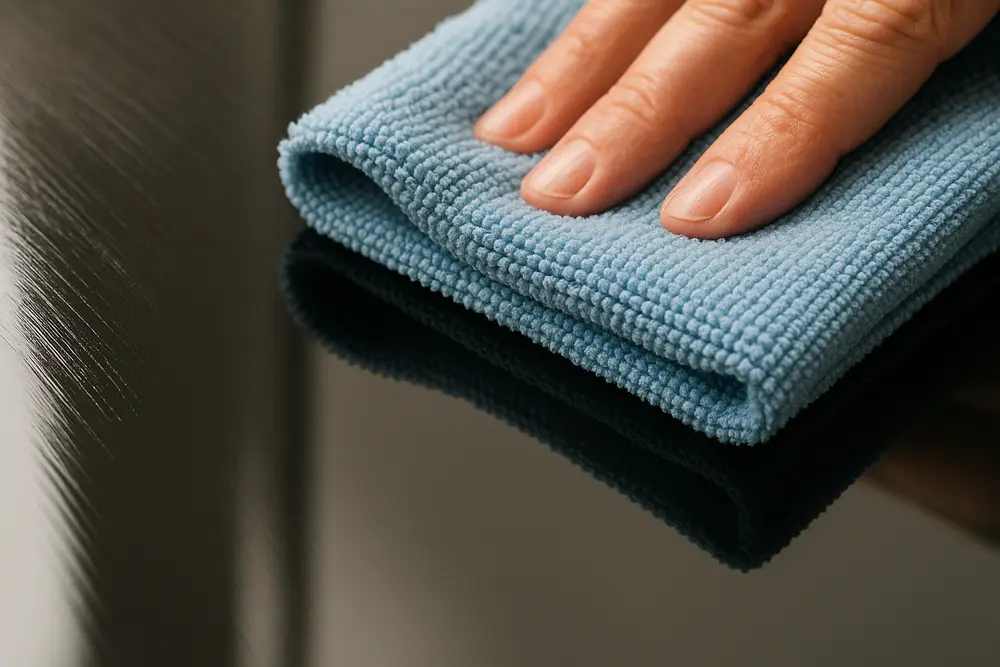
Clean microfiber drying towels can absorb a large amount of water without requiring heavy pressure. The word “clean” is doing serious work in that sentence. Microfiber doesn’t make scratching impossible. A towel carrying sand, grit, or dried wheel cleaner can mark paint regardless of what the package promised.
Begin with the roof, windshield, and other upper surfaces. Spread the towel flat so it contacts a broad area. You can lay it on the panel, let it absorb the water, and lift it away. This blotting method minimizes movement across the paint, although it takes a little longer.
For faster drying, place the towel flat and pull it in slow, straight passes with little or no downward pressure. You’re collecting water, not sanding a picnic table. Refold the towel as sections become wet, and switch to a fresh one when it becomes saturated. A soaked towel that merely relocates water isn’t helping.
Use a second clean towel for remaining moisture, windows, mirrors, and delayed drips. Straight passes make it easier to see where you’ve worked and reduce unnecessary movement. Circular wiping isn’t automatically disastrous, but vigorous circles with a dirty or saturated towel are a fine recipe for streaks and avoidable paint marks.
Which Microfiber Weave Works Best?
Twisted-loop microfiber is a practical choice for roofs, hoods, doors, and other broad panels because it can collect substantial water. Plush microfiber works well for blotting and is often useful with a compatible drying aid. Waffle-weave towels are thin, easy to fold, and particularly handy on glass and mirrors.
No weave is universally best. Towel size, construction quality, edge design, absorbency, and cleanliness matter. A higher GSM number only means that the fabric has more weight per square meter. It doesn’t prove that a towel is softer, safer, or more absorbent than every lighter option.
Use a Drying Aid Carefully
A drying aid is a spray designed to be used while the vehicle is still damp. Depending on the formula, it may add lubrication under the towel, reduce streaking, improve gloss, or leave temporary protection. It can be useful, especially on paint that feels less slick or when you want to limit towel drag.
Use the amount listed on the label. More product can create smears that look suspiciously like the problem you’re trying to prevent. Apply it only to surfaces approved by the manufacturer, and don’t use it on hot panels unless the directions specifically allow that.
Compatibility deserves attention if the vehicle has matte paint, vinyl wrap, paint-protection film, or a specialty coating. A product marketed for glossy clear coat may alter the appearance of a matte surface. A drying aid also won’t neutralize every mineral deposit. It’s a helper, not bottled immunity from hard water.
Know What Spot-Free Water Means
A spot-free rinse can reduce the dissolved material likely to remain after evaporation, but labels can get slippery. Softened water typically has hardness-forming calcium and magnesium exchanged for other ions. It isn’t necessarily free of all dissolved solids.
“Filtered water” is even broader. A sediment filter may catch particles, and a carbon filter may address certain tastes, odors, or chemicals, but neither automatically removes dissolved minerals. Deionization and reverse osmosis can substantially reduce dissolved substances when the equipment is operating and maintained correctly. Many car-wash systems use one or both methods for a spot-free final rinse.
Even with spot-free water, drying is the more reliable finish. Purified rinse water can mix with untreated water trapped in trim, collect airborne dust, or carry traces of leftover soap. At Brushy Creek Wash & Ride, we appreciate a good rinse system, but we wouldn’t tell you that chemistry repeals gravity. Mirrors and trim will still release drips when they feel like it.
Chase Water Out of Crevices
Most of the vehicle may be dry while several small reservoirs are waiting for your back to turn. Side-mirror housings, door handles, grilles, badges, window seals, roof rails, spoilers, fuel doors, trunk seams, and license-plate frames are common hiding places.
Use a smaller microfiber towel to reach around these areas. Open the doors, hatch, trunk, and fuel door when appropriate, then wipe the edges and jambs with a separate towel. Don’t use your best paint towel on a dirty door jamb and return it to the hood.
A dedicated vehicle dryer can push trapped water out without contacting the paint. Make sure the equipment supplies clean air and won’t blow oil, dust, or debris onto the vehicle. After you’ve finished, wait a few minutes and make another walkaround. Look beneath mirrors, handles, badges, and the rear hatch for narrow drip trails.
Keep Towels Clean and Absorbent
A towel that once swallowed water but now smears it around may be coated with fabric softener, detergent residue, wax, or drying product. Proper care keeps microfiber drying towels useful and reduces the chance of transferring contaminants back to the car.
- Wash paint towels separately from cotton, wheel towels, and heavily soiled utility cloths.
- Use a modest amount of liquid detergent and follow the towel’s care label.
- Avoid fabric softener and dryer sheets, which can coat the fibers and reduce absorbency.
- Use low heat or air-dry when permitted by the manufacturer.
- Store clean towels in a sealed or covered container away from dust.
- Retire towels that remain stiff, contaminated, damaged, or nonabsorbent after proper washing.
If a towel falls on the ground, it’s finished with paint duty until it’s been washed and inspected. Shaking it twice and declaring it rehabilitated won’t remove tiny grit. Laundry guidance from Whirlpool also recommends separating microfiber from lint-producing fabrics and avoiding fabric softener, while giving the towel’s care label priority.
Remove Fresh Water Spots Safely
If spots appear, move the vehicle into the shade and allow hot surfaces to cool. Rewash or thoroughly rewet a fresh deposit before touching it. Don’t scrub dry mineral residue across the paint. Dry the cleaned area with a fresh microfiber towel and inspect it under good lighting.
If the mark remains, choose a water-spot remover specifically labeled as safe for the surface. Read the directions, test it in a small inconspicuous area, and don’t let the chemical dry on the vehicle. Paint, glass, polished metal, plastic trim, wraps, and coatings may have different compatibility requirements.
Skip abrasive household cleaners, melamine foam, and undiluted household acids on automotive paint. Internet advice often treats vinegar as if every car has the same clear coat, trim, sealant, and coating. They don’t. If a defect remains visible after safe cleaning, it may be bonded or etched. Have the finish assessed before attempting aggressive polishing.
Common Water Spot Questions
Can I Let My Car Air-Dry?
You can, but air-drying increases the likelihood that droplets will evaporate and leave minerals or wash residue behind. Spot-free rinse water reduces the risk when the system is working correctly, but physically removing the water is still more dependable.
Why Are Spots Left After Towel-Drying?
The towel may have been saturated, nonabsorbent from laundry residue, or contaminated with drying product. Soap may not have been rinsed completely, or the panel may have started drying before you reached it. Water can also escape later from mirrors, trim, and seals. If the same rings remain through another proper wash, they may predate your latest cleaning.
Are Microfiber Towels Safe for Paint?
Clean, good-quality microfiber used with light pressure is generally suitable for drying vehicle paint. No towel is safe when it contains grit or is dragged over a surface that wasn’t properly washed and rinsed.
Does Wax Prevent Water Spots?
Wax, sealant, or a coating may change how water beads or sheets and can make drying easier. It doesn’t stop dissolved material from remaining when droplets evaporate. Protected paint still needs prompt drying.
How Many Drying Towels Do I Need?
That depends on the vehicle, towel size, weave, and how much water remains after rinsing. One large primary towel plus a clean finishing towel is a sensible minimum for many cars. Keep another backup nearby if you’re drying a large SUV, van, or truck.
Can Old Water Spots Damage Paint?
Some spots are removable surface deposits. Others can bond more strongly or leave visible defects after repeated heating and drying cycles. If careful washing and a compatible water-spot remover don’t solve the problem, stop experimenting and get the finish inspected before removing measurable clear coat with aggressive correction.